





Getting a Mortgage in Spain as a Non-Resident: A Guide for European Buyers
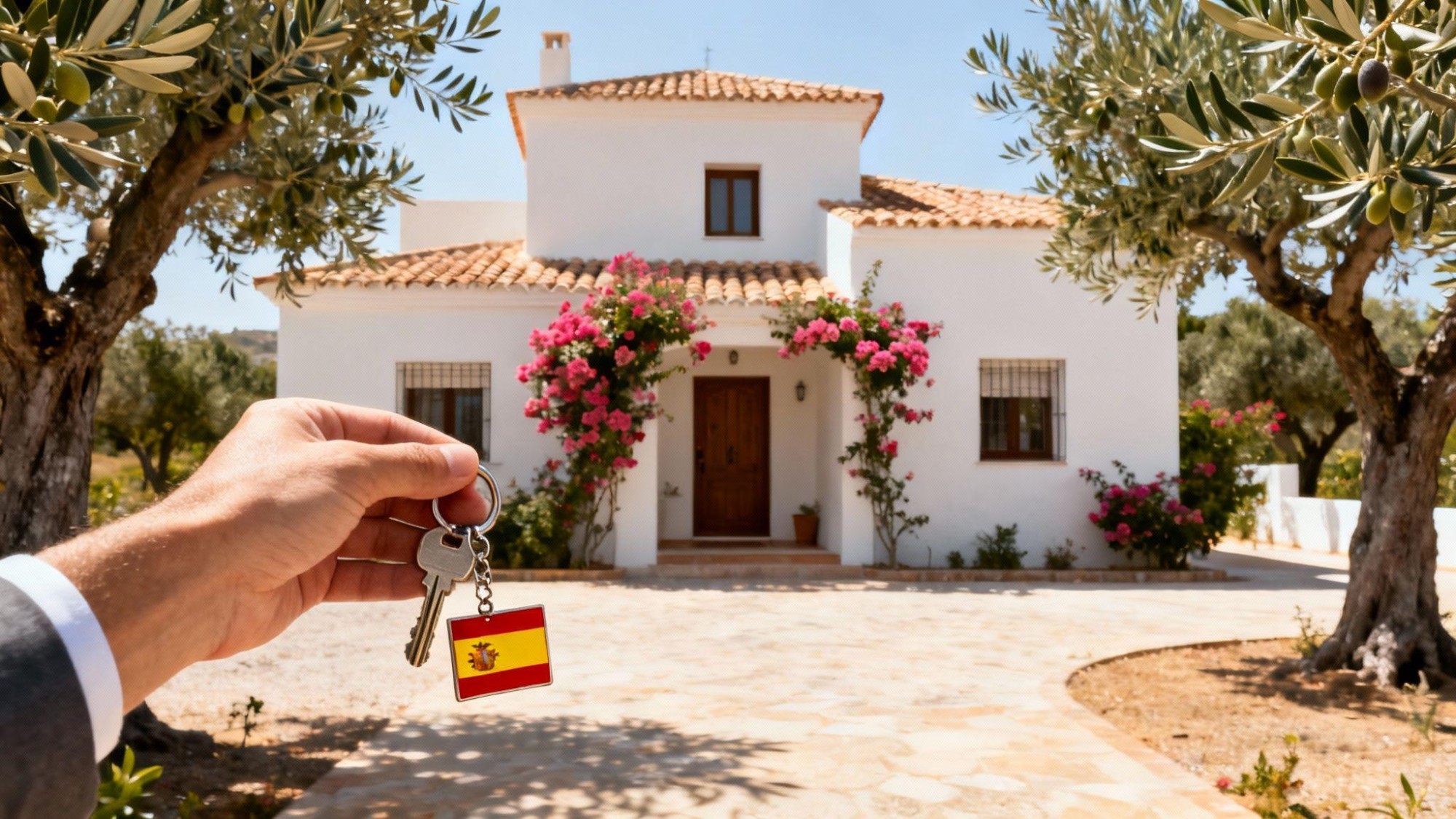
Planning to buy a property on the Costa Blanca while living abroad? Discover how Spanish mortgages work for non-residents, what financial requirements you should meet and how to prepare for the buying process.
Buying a property in Spain is a dream for many European buyers. Whether you are looking for a holiday apartment by the Mediterranean, a second home to enjoy throughout the year or a long-term investment, purchasing property in Spain does not necessarily mean having to pay the entire amount upfront.
In fact, non-residents can obtain a mortgage from a Spanish bank, even if they continue to live and work in another European country.
However, the conditions are not always the same as those offered to Spanish residents. Banks generally apply different lending criteria, require a higher initial contribution and carry out a more detailed assessment of foreign income and financial circumstances.
Understanding these requirements before starting your property search can make the entire process considerably easier.
In this guide, E-Style Spain explains what European buyers need to know about getting a mortgage to buy property in Spain as a non-resident.
1. Can non-residents get a mortgage in Spain?
Yes. Spanish banks offer mortgage products specifically designed for international buyers who wish to purchase property in Spain without becoming Spanish tax residents.
This means that you can continue living and working in countries such as Belgium, the Netherlands, Germany, France, Sweden, Poland or Ireland while financing a property on the Costa Blanca.
In most cases, banks will consider applications from foreign buyers with stable employment, regular income and a healthy financial situation.
Your nationality is not the only factor. Banks will also consider:
- Your country of residence.
- Your employment status and income.
- Your existing financial commitments.
- Your savings and available deposit.
- The currency in which you receive your income.
- The property you intend to purchase.
Being a European Union citizen can make certain administrative aspects easier, but it does not automatically guarantee mortgage approval or the same financing conditions as a Spanish resident.
2. How much can a non-resident borrow in Spain?
One of the most important differences between resident and non-resident mortgages is the amount a bank is prepared to finance.
As a general guideline, Spanish banks typically offer non-residents financing of approximately 60% to 70% of the property's value.
This means that buyers should normally be prepared to contribute between 30% and 40% of the purchase price from their own savings, in addition to taxes and purchasing expenses.
For comparison, Spanish residents may be eligible for financing of up to 80% in certain circumstances.
The final mortgage amount depends on the bank's assessment of your financial profile and the property's valuation.
Importantly, banks generally calculate the maximum financing based on the lower of the agreed purchase price and the official bank valuation.
Example: Buying a €250,000 property on the Costa Blanca
Let's assume you find an apartment with a purchase price of €250,000 and the bank agrees to finance 70% of its value.
| Item | Amount |
|---|---|
| Property purchase price | €250,000 |
| Mortgage (70%) | €175,000 |
| Your contribution (30%) | €75,000 |
| Taxes and purchasing expenses | Additional |
In this example, you would need at least €75,000 towards the purchase price, plus sufficient savings to cover the applicable taxes and other expenses.
As a result, it is important to calculate your total available budget before deciding which properties to view.
3. What income do you need to qualify for a Spanish mortgage?
Spanish banks assess your ability to repay the mortgage rather than simply looking at the value of the property.
For non-residents, the stability and reliability of foreign income are particularly important.
Banks generally look for:
- Regular employment income.
- A permanent employment contract or a demonstrably stable professional situation.
- Consistent income over time.
- Existing savings and financial assets.
- A manageable level of outstanding debt.
As a general guideline, many lenders prefer the total monthly debt commitments, including the proposed mortgage, to remain around 30–35% of net monthly income. The Bank of Spain identifies 40% as a recommended upper limit for total debt payments, including existing loans and other financial commitments.
For example, if your net monthly household income is €4,000, a bank may prefer your total monthly debt repayments to remain around €1,200–€1,400.
This is an indicative illustration, not a guaranteed lending threshold. Every bank applies its own affordability criteria.
What if you are self-employed?
Being self-employed does not automatically prevent you from obtaining a mortgage in Spain.
However, banks usually require additional documentation to establish that your business generates sufficient and consistent income.
This may include several years of tax returns, financial statements and bank account records.
What if you receive a pension?
Retired European buyers can also apply for Spanish mortgages.
Regular pension income can be considered, provided it is sufficient to meet the bank's affordability requirements and the applicant satisfies its age and loan-term conditions.
4. What documents do you need to apply?
Preparing your documentation in advance can significantly simplify the mortgage application process.
Although requirements differ between banks, non-resident buyers should generally expect to provide the following:
Personal identification
- Valid passport or national identity card.
- NIE (Número de Identidad de Extranjero), where required by the lender.
- Proof of residential address in your home country.
- Information about your marital status.
Employment and income
- Recent payslips, usually covering the last three months.
- Employment contract or employer's certificate.
- Latest annual income tax return.
- Pension statements, where applicable.
- For self-employed applicants, business accounts and tax returns, generally covering the last two or three years.
Financial information
- Recent bank statements.
- Evidence of existing savings and investments.
- Details of outstanding loans, mortgages and other financial commitments.
- Credit report or equivalent documentation from your country of residence, where requested.
Property documentation
Once you have selected a property, the bank may also request:
- Property details and purchase price.
- Reservation agreement or private purchase contract.
- Land Registry information (Nota Simple).
- Official property valuation (Tasación).
Depending on your country of residence and the bank, some documents may need to be translated into Spanish or formally certified.
It is always advisable to check the exact requirements with the chosen lender before submitting your application.
5. Does the currency of your income matter?
Yes. This is particularly relevant for European buyers.
If you receive your salary in euros, the assessment is generally more straightforward because your income and mortgage repayments are denominated in the same currency.
However, buyers earning in other currencies, such as British pounds, Swiss francs or Swedish kronor, may also be eligible.
In these cases, the bank may apply additional criteria to account for exchange-rate fluctuations.
This is important because changes in currency values can affect your effective repayment capacity.
For European buyers receiving income in euros, financing a Spanish property can therefore be a relatively straightforward option, provided the rest of their financial circumstances meet the lender's requirements.
6. What is the mortgage application process in Spain?
Although the process may vary between financial institutions, obtaining a mortgage in Spain generally involves several stages.
Step 1: Evaluate your financial situation
Before choosing a property, establish how much you can comfortably afford.
Consider your available savings, monthly income, existing debts and the additional costs associated with purchasing a property.
Step 2: Contact banks and explore financing options
Compare mortgage offers from Spanish banks that provide financing to non-residents.
Look at the interest rate, repayment period, associated fees, early repayment conditions and any additional products required to obtain preferential terms.
It is also worth obtaining an initial assessment before committing to a property.
Step 3: Choose your property
Once you have a realistic idea of your borrowing capacity, you can start looking for a suitable property.
Whether you are interested in a modern apartment in Punta Prima, a villa in Villamartín or a new-build property close to the beaches of Orihuela Costa, knowing your budget beforehand will help you make more informed decisions.
Step 4: Submit your mortgage application
The bank will review your personal and financial documentation, assess your income and existing commitments, and evaluate the property.
An official valuation will normally be required before the final mortgage amount can be established.
Step 5: Receive your mortgage offer
If your application is approved, the bank will provide the relevant pre-contractual mortgage documentation, including the European Standardised Information Sheet (ESIS), known in Spain as the FEIN.
This document outlines the main conditions of the mortgage and allows you to review the offer before signing.
Step 6: Sign the mortgage and purchase deeds
Once all requirements have been fulfilled, the final signing takes place before a Spanish notary.
The mortgage deed and property purchase deed are formalised, the relevant payments are completed and ownership is transferred.
You can then receive the keys to your new Spanish home!
7. Additional costs to consider when buying with a mortgage
Your initial contribution towards the property is not the only expense you should consider.
When purchasing in Spain, buyers must also budget for taxes and other transaction-related costs.
These may include:
- Property transfer tax (ITP): Applicable to resale properties, with the rate depending on the relevant regional tax rules.
- VAT (IVA): Generally applicable to new-build residential properties.
- Stamp duty (AJD): Applicable in relevant transactions, including certain new-build purchases.
- Notary and Land Registry fees: Associated with formalising and registering the purchase.
- Legal fees: If you appoint an independent lawyer to represent your interests.
- Bank valuation: The cost of the official property valuation required by the lender.
Mortgage-related expenses are subject to separate rules, and the bank generally covers certain formalisation costs associated with the mortgage deed. The borrower normally pays for the property valuation and any applicable agreed mortgage-related services.
The exact amount you need will depend on whether you purchase a new-build or resale property, the property's price and the applicable regional taxes.
We recommend calculating all these expenses before making a financial commitment.
8. Can you get a mortgage in Spain before finding a property?
In many cases, yes.
Some Spanish banks and mortgage providers can carry out an initial assessment of your financial circumstances before you have selected a specific property.
This can be particularly useful for international buyers who are still exploring different locations and property types.
An initial assessment can help you understand your approximate borrowing capacity and establish a realistic purchasing budget.
However, this is not the same as a final mortgage approval. The lender will still need to assess the chosen property, carry out its valuation and complete all necessary checks.
Our advice is to explore your financing options early, rather than waiting until you have found your ideal home.
Finding Your Property on the Costa Blanca with E-Style Spain
Purchasing a property in another country can seem complicated, particularly when you need to coordinate financing, documentation and the legal aspects of the transaction from abroad.
At E-Style Spain, we understand that buying a home in Spain is about much more than finding the right property.
With more than 20 years of experience in the Costa Blanca property market, our team helps international buyers discover suitable homes in some of the area's most desirable locations.
From apartments and bungalows to villas and new-build developments, we offer a wide selection of properties in Punta Prima, Playa Flamenca, La Zenia, Villamartín, Campoamor and the surrounding areas.
Whether you are planning to purchase a holiday home or considering a more permanent move to Spain, we can guide you through the property search and help make the purchasing experience as straightforward as possible.
Thinking about buying a property in Spain and need financing?
Get in touch with E-Style Spain. Tell us where you are planning to buy, what type of property you are looking for and your approximate budget.
Our team will be happy to help you explore the available property options and guide you towards the next steps in your Spanish property purchase.
Your Mediterranean home could be closer than you think!
Share


