





How Much Does It Cost to Buy a Property on the Costa Blanca in 2026?
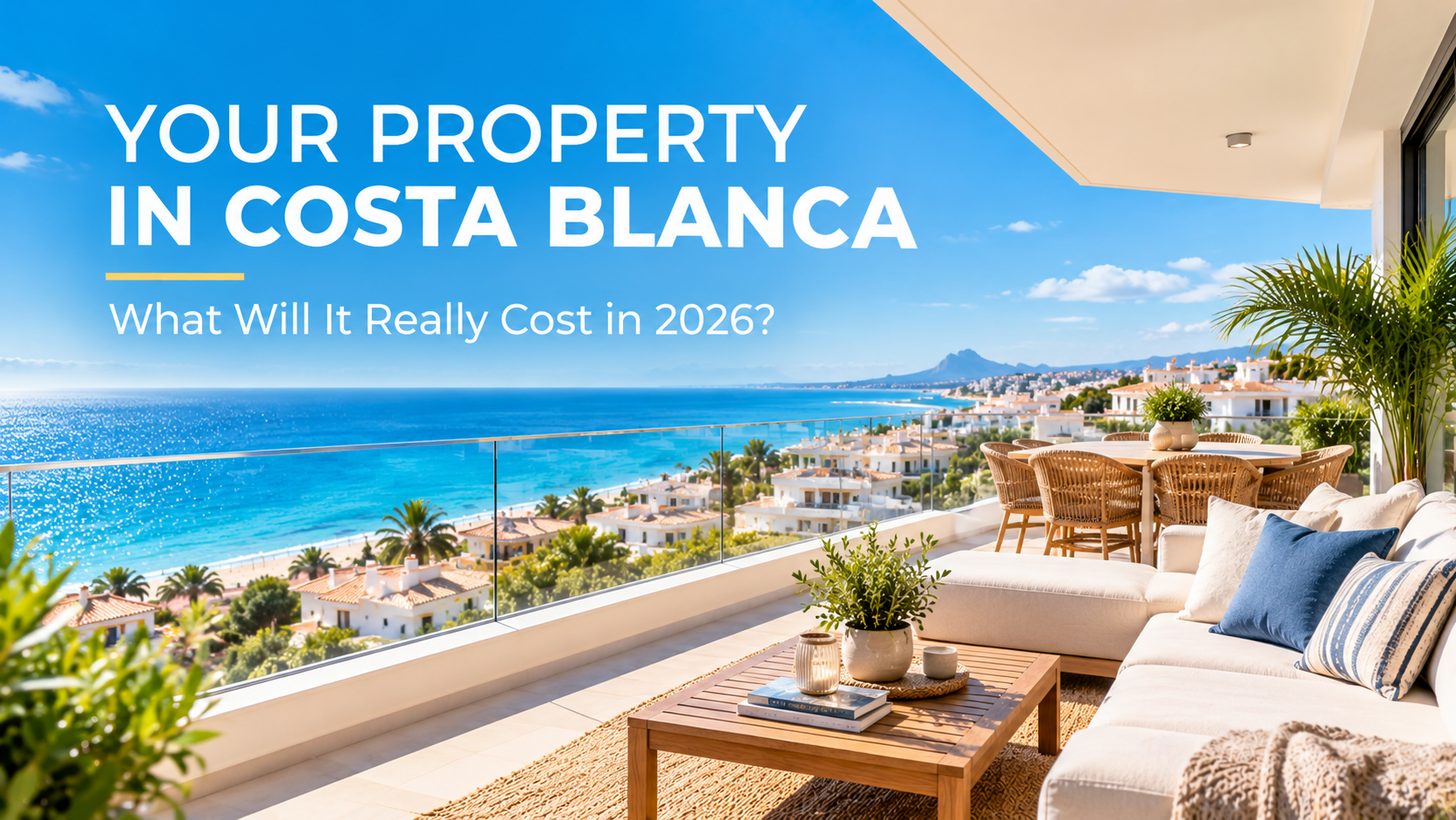
Buying a property in Spain is an exciting step, whether you're looking for a holiday home, a place to retire or a long-term investment. However, the purchase price is only part of the cost. Taxes, legal fees and other expenses can add thousands of euros to your budget.
If you're planning to buy in Costa Blanca South, particularly in Torrevieja, Orihuela Costa, Guardamar del Segura or Santa Pola, this guide explains the main costs to consider in 2026 and how to prepare financially before making a purchase.
1. Property Taxes: Resale vs. New-Build Homes
The taxes you pay depend mainly on whether you're buying a resale property from a private owner or a new-build home directly from a developer.
Property type | Main taxes | General rate used in this guide |
Resale property | Property Transfer Tax (ITP) | 9% |
New-build property | VAT (IVA) | 10% |
New-build property | Stamp Duty (AJD) | 1.4% in the example below |
In the Valencian Community, the general ITP rate used here is 9% from 1 June 2026. New-build residential properties are generally subject to 10% VAT, plus AJD where applicable.
These are reference rates, not a personalised tax calculation. The applicable rate and taxable base can depend on the property, the transaction and any relevant exceptions. In particular, the taxable value used for ITP may differ from the agreed purchase price.
Before committing to a purchase, confirm the current tax rules with a qualified Spanish tax adviser or the Valencian tax authorities.
2. How Much Does It Cost to Buy a Resale Property?
Resale properties are popular with international buyers thanks to the variety of locations, styles and price ranges available across the Costa Blanca. However, it's important to budget for ITP in addition to the purchase price.
Consider these examples, assuming the taxable base matches the purchase price and the 9% ITP rate applies:
Property priced at €200,000
Purchase price: €200,000
ITP at 9%: €18,000
Total: €218,000, before other purchase expenses.
Property priced at €300,000
Purchase price: €300,000
ITP at 9%: €27,000
Total: €327,000, before other purchase expenses.
These examples show why it's important to calculate your full budget before making an offer. Notary fees, Land Registry costs and legal services must also be considered, and the taxable base should be checked for the specific property.
3. What About a New-Build Property?
New-build homes appeal to buyers looking for modern layouts, contemporary finishes and, in some cases, communal swimming pools, landscaped gardens and other facilities.
Unlike resale properties, new-build homes purchased directly from a developer are generally subject to VAT and AJD.
For example, for a property priced at €300,000:
Cost | Amount |
Property price | €300,000 |
VAT at 10% | €30,000 |
AJD at 1.4% | €4,200 |
Total before other expenses | €334,200 |
The rates and taxable bases used in this example must be confirmed for the specific transaction. If you're buying off-plan, also review the payment schedule, completion conditions and safeguards for payments made before the property is delivered.
When comparing new-build and resale homes, look beyond the advertised price and consider the taxes, transaction costs and potential maintenance expenses.
4. Notary, Land Registry and Legal Fees
Taxes are usually the biggest additional expense, but they aren't the only one. Completing a property purchase in Spain involves several administrative and professional services.
The main costs may include:
Notary fees: For formalising the purchase deed.
Land Registry fees: For registering your ownership.
Legal fees: For checking the property's legal status, reviewing contracts and protecting your interests.
Translation services: If you need help understanding Spanish documents.
Valuation fees: If you're applying for a mortgage and the lender requires a property valuation.
For international buyers, independent legal advice is particularly valuable. A lawyer can check ownership details, identify relevant charges or restrictions, review planning documentation and explain your obligations before you sign.
Request estimates in advance so these expenses are included in your budget rather than becoming last-minute surprises.
5. Buying on the Costa Blanca South: What Should You Budget For?
Costa Blanca South offers a wide choice of properties, from beachfront apartments to townhouses and detached villas. Torrevieja, Orihuela Costa, Guardamar del Segura and Santa Pola each have their own property market and lifestyle advantages.
Your location and property type can influence both the purchase price and ongoing expenses. For example, an apartment in a development with a swimming pool, gardens and lifts may have higher community fees than a property with fewer shared facilities. A detached villa may offer more privacy but require additional spending on garden care, pool maintenance and repairs.
Before making an offer, consider:
Property condition: Older homes or properties needing renovation may require a substantial additional budget.
Community fees: Check the regular costs and whether extraordinary contributions (derramas) are planned.
Location and amenities: Consider access to shops, healthcare, transport and the beach.
Long-term maintenance: Factor in the likely cost of keeping the property in good condition.
Our tip: Set your total budget before arranging viewings. Comparing the full cost of ownership—not just asking prices—will help you make a more informed decision.
6. Can Non-Residents Get a Spanish Mortgage?
Yes, many Spanish banks consider mortgage applications from non-residents. However, lending conditions depend on your income, existing debts, financial profile, country of residence and the lender's criteria.
Banks may ask for proof of income, bank statements, details of existing financial commitments and other supporting documents. Some documents may need to be translated.
Remember that a mortgage generally covers only part of the property's value. You'll usually need savings to cover your contribution towards the purchase price, taxes and other expenses not covered by the loan.
Spanish mortgage rules generally require the lender to cover certain mortgage formalisation costs, including specified notary, registration, administration and mortgage Stamp Duty expenses. The buyer generally pays for the property valuation. These costs are separate from the expenses associated with purchasing the property itself.
Before committing to a property, speak to a bank or mortgage adviser to establish how much you may be able to borrow and how much cash you'll need to complete the purchase.
7. Don't Forget the Costs of Owning a Property
Once the purchase is complete, you'll need to budget for regular expenses. These vary depending on the property, its location and whether you live in it, use it as a holiday home or rent it out.
Typical ongoing costs include:
IBI (local property tax): An annual tax charged by the local council.
Community fees: Payments for shared areas and facilities, where applicable.
Utilities and insurance: Electricity, water, internet and home insurance.
Maintenance and repairs: Including garden or pool upkeep where relevant.
Non-resident tax: Spanish tax obligations may apply even if you don't rent out the property.
Non-resident tax obligations depend on your circumstances and how the property is used. Rental income may be subject to additional tax and reporting requirements. If you plan to rent out your property, check the applicable tax rules and any regional, local or community restrictions before relying on projected rental income.
Planning for these costs from the beginning gives you a more realistic picture of the long-term financial commitment.
Frequently Asked Questions
How much extra should I budget when buying a property in Spain?
It depends on the type and price of the property, the applicable taxes and the professional services you need. Purchase taxes are often the largest additional expense, followed by notary, Land Registry and legal costs. Calculate the taxes for your specific property and request estimates for the remaining expenses.
What taxes do I pay when buying a property in Costa Blanca?
Resale properties are generally subject to ITP, while new-build homes purchased directly from a developer are generally subject to VAT and AJD. The final amount depends on the applicable rates, taxable base and circumstances of the transaction.
What is the ITP rate in the Valencian Community in 2026?
The general rate used in this guide is 9% from 1 June 2026. Different rates or tax treatment may apply in certain circumstances. Confirm the applicable rate before completing your purchase.
How much does it cost to buy a €200,000 resale property?
Assuming the taxable base is €200,000 and ITP applies at 9%, the tax would be €18,000. The price plus ITP would total €218,000, before other purchase expenses.
How much does it cost to buy a €300,000 new-build property?
Using the illustrative rates in this guide, VAT at 10% would be €30,000 and AJD at 1.4% would be €4,200. The price plus these taxes would total €334,200, before other expenses.
Can foreigners buy property in Spain?
Yes. Foreign nationals can generally buy property in Spain. Depending on their circumstances, they may need a foreigner identification number (NIE) and other documentation to complete the transaction.
Do I need a lawyer to buy a property in Spain?
A lawyer isn't always legally required, but independent legal advice is strongly recommended, particularly if you're buying from abroad. A lawyer can check the property's legal status, review the contract and help identify potential issues before completion.
What are the ongoing costs of owning a property on the Costa Blanca?
Typical expenses include IBI, community fees, utilities, insurance and maintenance. Non-resident owners may also have Spanish tax obligations, depending on how the property is used and their individual circumstances.
Thinking of Buying a Property on the Costa Blanca?
At E-Style Spain, we help international buyers explore the Costa Blanca property market and understand the practical considerations involved in purchasing a home in Spain.
Whether you're looking for a holiday apartment, a permanent residence or an investment property, having a clear budget and reliable guidance can make the process much easier.
Get in touch with E-Style Spain and take the first step towards your Mediterranean dream.
Share


